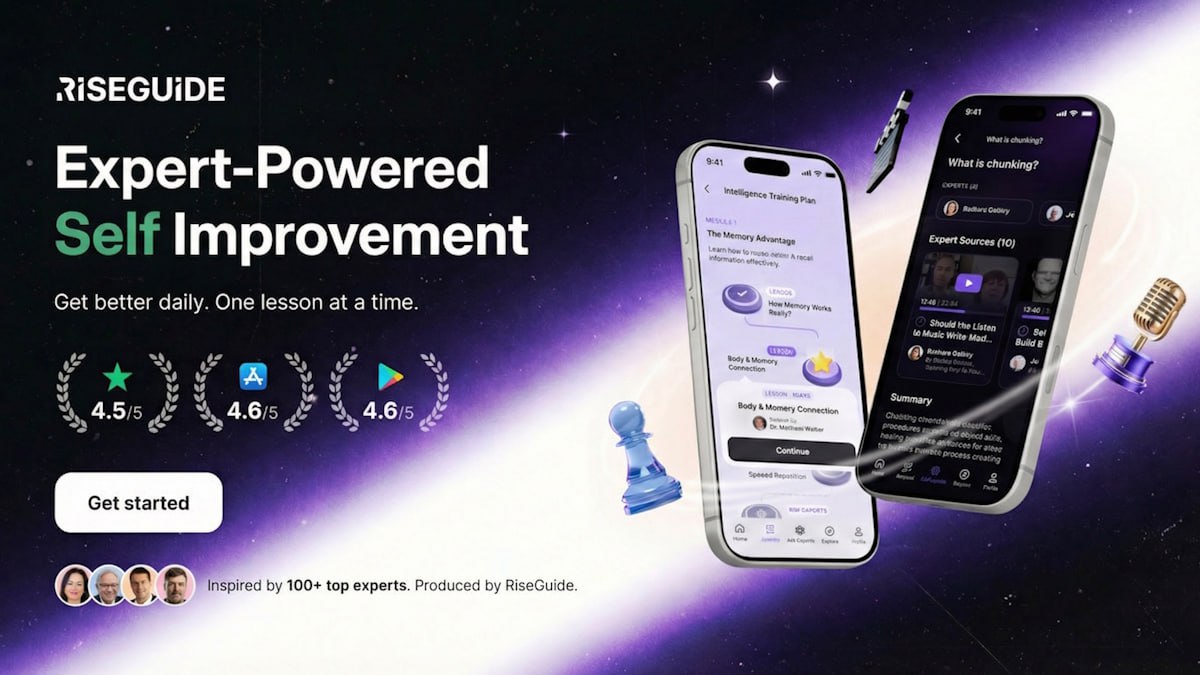
Top Personal Growth Platforms That Go Beyond Just Learning
Most learning platforms treat knowledge transfer as their primary function. Users watch, read, and collect information. Behavior remains unchanged. This creates a fundamental problem: comprehension without application produces no measurable outcome.
We evaluated these services using a single criterion. We did not focus on production quality or instructor reputation. The central question: does the platform help users convert insights into repeated action?
Why Most Learning Apps Fail at Behavior Change
Content consumption does not equal skill acquisition. Users can complete dozens of courses and still lack competence in the target domain. Platforms optimize for engagement metrics. Watch time. Course starts. Library additions. These correlate poorly with behavior change.
Cognitive research demonstrates that information degrades rapidly without reinforcement. Spaced repetition, retrieval practice, and application contexts are necessary for retention. Most applications provide none of these.
The structural limitations of traditional course formats contribute to this gap. Consider the following:
- Passive video formats require no active recall;
- Dense content prevents daily return behaviors;
- Progress metrics track completion, not competence;
- Inspiration is treated as equivalent to implementation;
- No mechanism forces application after consumption.
These patterns explain why users feel they have learned something yet cannot produce the skill when needed. We therefore assessed each platform on its capacity to embed development into daily routines rather than its library size or faculty roster.
1. RiseGuide
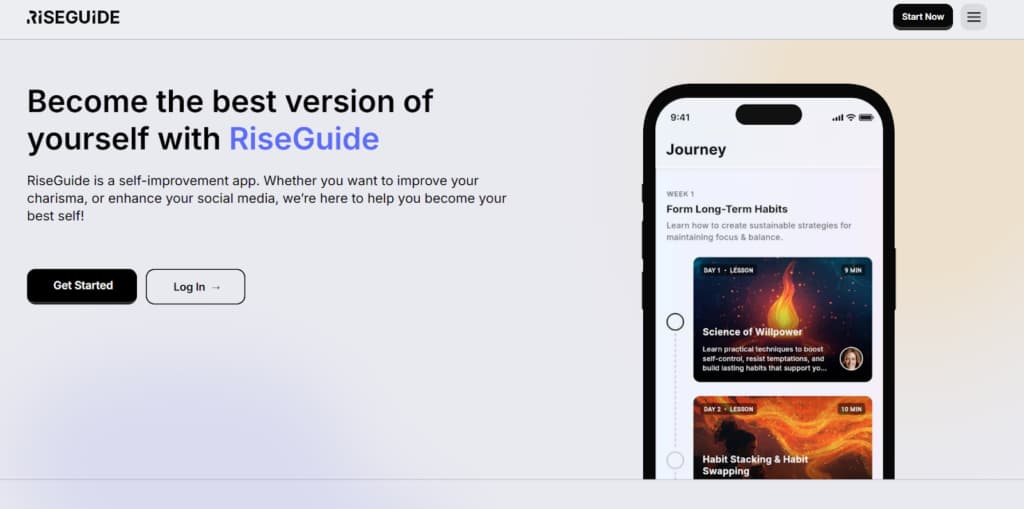
RiseGuide structures skill development as daily practice rather than course completion. Lessons run three to seven minutes. Content is organized into learning paths focused on specific competencies: communication, confidence, memory, and critical thinking. Users select a path and engage with one lesson per day.
Why It Leads for Daily Skill Application
Short format reduces initiation threshold. Tasks requiring less than eight minutes rarely trigger procrastination responses. This is consistent with behavioral research on task persistence.
The platform embeds practice mechanics directly into each lesson. Frameworks appear alongside application exercises. Cheat sheets, flashcards, and quizzes require active response rather than passive reading. Users do not learn about communication frameworks. They apply them during the lesson.
Specific mechanisms that support daily practice:
- The platform employs several design patterns to reinforce consistency:
- Lesson duration under eight minutes removes scheduling barriers;
- Progress streaks reward continuity over session intensity;
- Interactive components require action, not just reading;
- SEEK tool retrieves expert-sourced answers to user questions;
- Daily to-do lists eliminate choice paralysis.
RiseGuide functions as a training environment rather than a content repository. Usage resembles workout sessions more than library visits.
Limitations of the Format
The model assumes consistent participation. Users who open the application sporadically receive limited benefits. This is inherent to any system targeting behavior modification rather than information transmission.
Measurable progress requires weeks or months. Users expecting immediate transformation often express frustration. Additionally, lesson content provides general frameworks rather than bespoke solutions. Individuals must adapt principles to their specific professional or personal contexts.
Recognized constraints of behavioral learning formats:
- Personal consistency determines outcomes, no alternative pathways exist;
- Progress accumulates gradually and may feel imperceptible;
- Initial feature density can overwhelm new users;
- Content requires contextual adaptation by the user.
These characteristics reflect the nature of skill development rather than product deficiencies. Quick solutions do not produce durable behavior change.
2. MasterClass
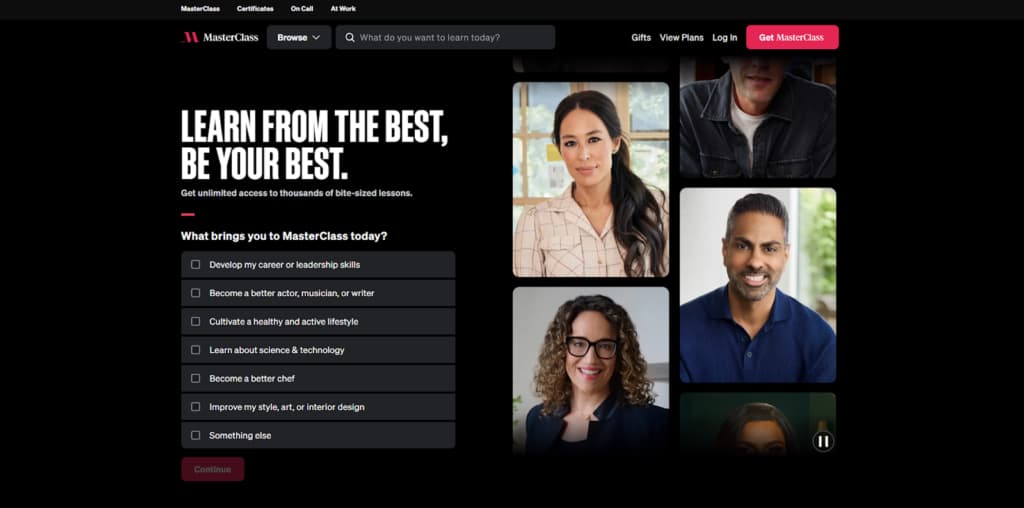
MasterClass produces high-production courses taught by recognized experts and celebrities. Cinematography, narrative structure, and editorial polish distinguish the platform. Courses cover creative arts, business, science, and public leadership.
Where It Encourages Learning
Narrative instruction improves recall of conceptual material. Chris Voss’s negotiation scenarios persist in memory. David Mamet’s writing sessions convey aesthetic principles through demonstration.
Effective elements of the MasterClass format:
- First-hand accounts from genuine domain experts;
- Production values create sustained viewer attention;
- Supplementary workbooks accompany most courses;
- Cross-disciplinary catalog encourages exploration.
These features make the platform engaging and memorable. However, they do not inherently require consistent skill practice from the learner.
Why It Rarely Becomes a Daily Practice Tool
The viewing experience positions users as audience members rather than practitioners. Thirty-minute episodes with musical scoring and narrative arcs resemble documentary consumption.
Structural barriers to daily engagement include:
- Episode length prevents brief daily sessions;
- Passive consumption model dominates interaction;
- Celebrity presentation may overshadow skill transfer;
- Single course completion requires four to six hours;
- Platform metrics emphasize completion rates over application.
MasterClass serves the inspiration function effectively. It does not support skill installation.
3. Studio
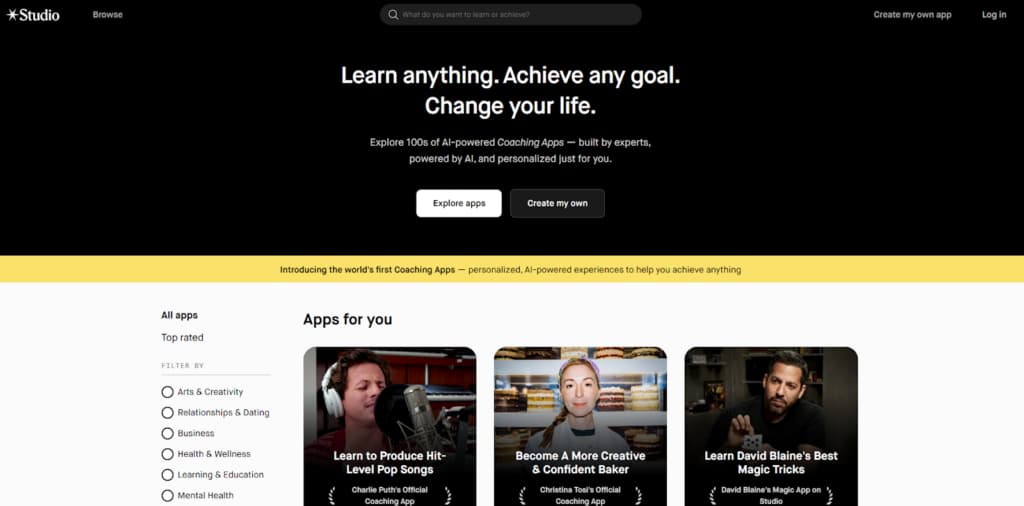
Studio offers project-based courses for creative professionals. Music production, photography, culinary arts, and design comprise the core catalog. Instruction comes from working practitioners rather than academics.
Where It Supports Action
Project requirements compel output. Course completion depends on submitting tangible work. This represents a stronger application mechanism than most competitors.
Action-oriented platform characteristics:
- Submitted projects verify skill application;
- Practitioner instructors teach current techniques;
- Narrow topic focus supports specific skill acquisition;
- Peer feedback provides external accountability.
These elements increase the likelihood that learners will practice what they study. However, they do not necessarily create a lightweight, repeatable daily routine.
Where It Breaks the Daily Habit Loop
Courses demand extended sessions. Users must allocate one to two hours for meaningful progress. Daily micro-practice is not part of the model.
Daily habit integration failures:
- Binge consumption conflicts with spaced learning principles;
- Creative work requires equipment setup and environmental preparation;
- No daily prompting or reinforcement exists;
- Skill depth is prioritized over practice frequency.
Studio performs well for users with dedicated project time. It does not accommodate daily six-minute engagement patterns.
4. Mindvalley
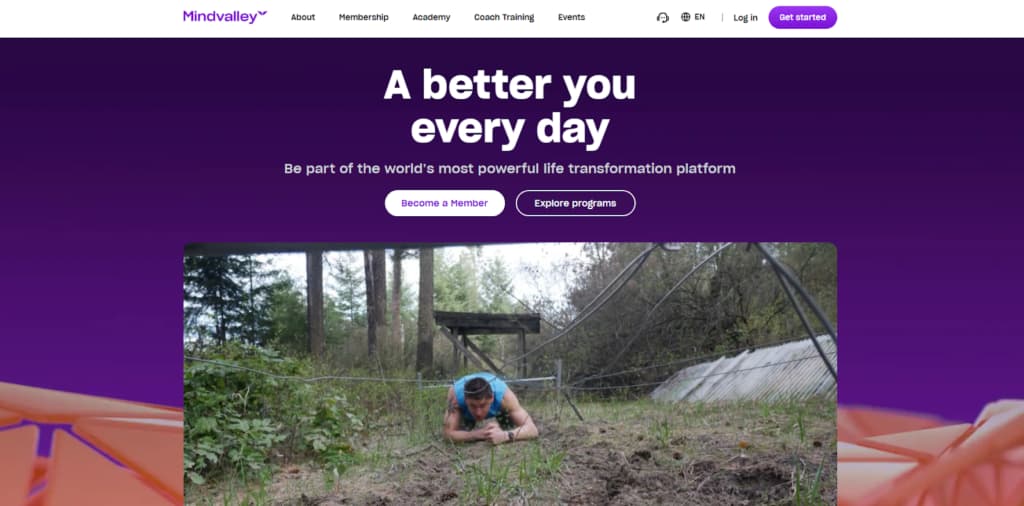
Mindvalley develops curricula focused on personal transformation. Spiritual development, longevity, productivity, and relationships appear prominently. Courses span six to eight weeks. Instruction comes from movement leaders and authors.
Strengths for Structured Growth
Cohort-based enrollment creates commitment mechanisms. Users begin with peers and receive scheduled content. This structure reduces attrition relative to self-paced alternatives.
Functional advantages of the Mindvalley model:
- Curricular sequencing prevents random topic switching;
- Embedded practices include meditation and journaling;
- Community accountability increases persistence;
- Broad life domains extend beyond career skills.
These features support structured engagement over longer learning arcs. They do not, however, automatically translate into lightweight daily practice.
Why It’s Hard to Maintain Daily Consistency
Daily lesson materials often exceed twenty minutes plus supplementary practice. This time requirement exceeds availability for many working professionals.
Consistency challenges in the format:
- Lesson length exceeds micro-learning thresholds;
- Spiritual framing may not align with user preferences;
- High engagement requirements produce mid-course drop-off;
- Production emphasizes inspiration over repetition frequency.
Mindvalley suits extended immersion periods. Daily integration proves difficult for time-constrained users.
5. Skillshare
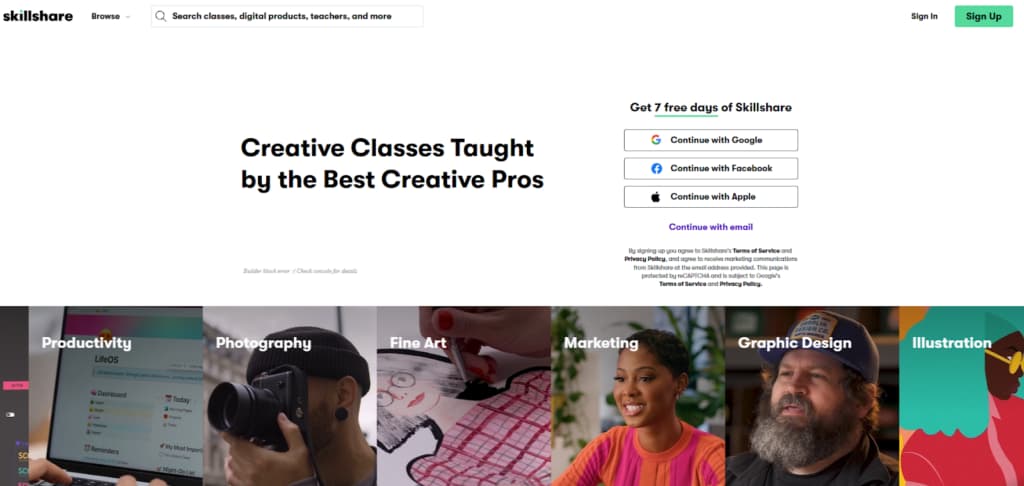
Skillshare operates as a subscription-based marketplace for creative and professional skills. Teachers are independent practitioners. Course formats include segmented video instruction with assigned projects.
Where It Encourages Doing
Project submission is embedded in course requirements. Users must produce and upload work to complete most classes. This forces application beyond passive viewing.
Practical application mechanics:
- Mandatory projects verify skill execution;
- Video segments run three to five minutes;
- Extensive catalog breadth across creative domains;
- Peer viewing creates mild accountability pressure.
These elements increase the likelihood that learners will produce tangible outcomes. However, they do not necessarily create a consistent daily practice routine.
Where It Lacks Daily Micro Structure
Courses retain traditional beginning-middle-end structures. Users consume them in sessions rather than incremental units.
Gaps for daily practice integration:
- No daily prompting or scheduled reinforcement;
- Skill practice depends entirely on user initiative;
- Instruction quality varies substantially across teachers;
- Platform incentives favor browsing over repetition.
Skillshare enables skill acquisition for motivated users. It does not engineer daily practice behavior.
6. Deepstash
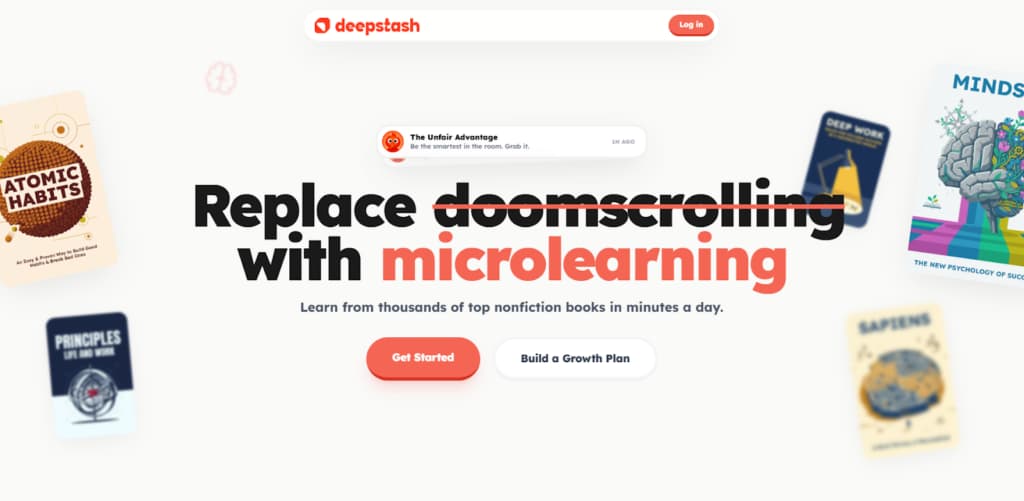
Deepstash presents ideas as individual cards. Each card contains one insight extracted from books, articles, or podcasts. Navigation is swipe-based. No courses, no progression paths, no assessments.
Where It Works Well
Entry friction is negligible. Users open the application, read one card, close it. Session duration averages under one minute.
Functional strengths of the format:
- Zero commitment required for engagement;
- High idea density per time unit;
- Visual presentation supports quick scanning;
- Social sharing functions are integrated.
These elements make the platform easy to access at any moment. However, convenience alone does not translate into sustained learning or skill development.
Why It Struggles With Skill Formation
Collection does not constitute learning. The application optimizes for accumulation rather than retention. Users build libraries of insights they will not revisit.
Skill development limitations:
- No application mechanisms exist;
- Original context is stripped from each idea;
- No repetition or spaced exposure occurs;
- Consumption is passive by design;
- Progress is neither defined nor measured.
Deepstash functions effectively as an inspiration feed. It does not support skill acquisition or behavior change.
7. Udemy
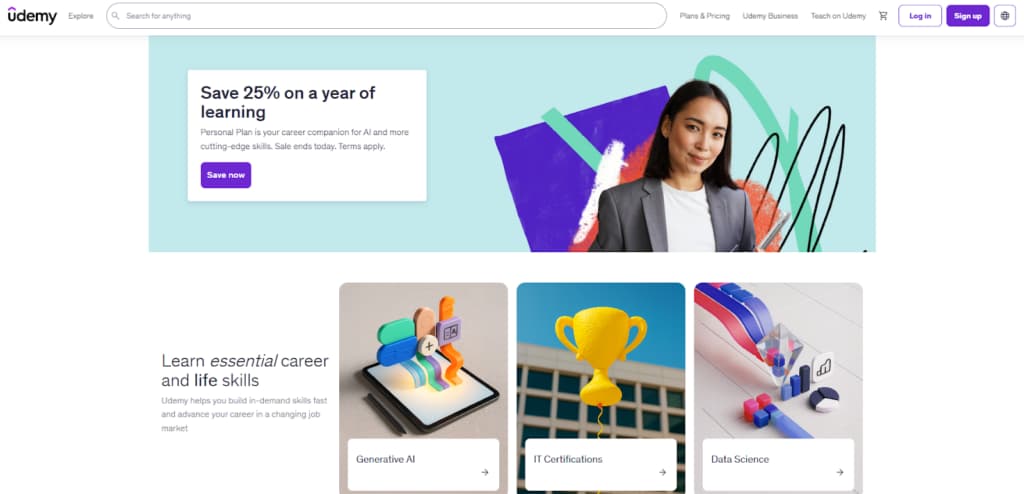
Udemy is a large-scale course marketplace. Hundreds of thousands of courses are available. Topics span technical certification, creative arts, business strategy, and personal development. Quality varies significantly across instructors.
Strength in Depth and Variety
Users seeking instruction on specific, narrow topics are likely to find relevant content. Catalog depth is the platform’s primary differentiator.
Notable platform characteristics:
- Unmatched course volume and topic breadth;
- Lifetime access for individual course purchases;
- Comprehensive treatment of technical subjects;
- Frequent pricing promotions reduce access barriers.
These strengths make the platform well suited for targeted, topic-specific learning. They do not, however, inherently support consistent daily skill practice.
Weakness in Daily Habit Integration
Udemy does not incentivize course completion or skill application. Instructor compensation is not tied to student outcomes. Completion rates for self-paced courses are low.
Habit formation deficits include:
- No daily structure or progression prompts;
- Passive video constitutes primary format;
- Instructor incentives misaligned with student persistence;
- Platform success metrics prioritize sales volume.
Udemy operates as a reference library. It is not configured for daily skill practice.
8. Headway
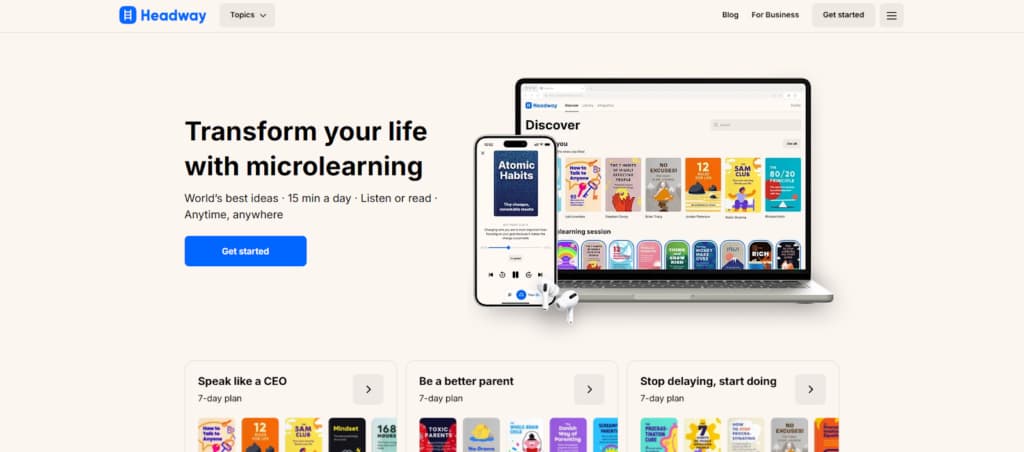
Headway summarizes nonfiction books into fifteen-minute text and audio formats. Daily insights, progress tracking, challenges, and visual summaries comprise the interaction model. The service applies micro-learning patterns to book consumption.
Where It Helps Expand Knowledge
The format compresses source material efficiently. Fifteen minutes yields thesis statements, supporting arguments, and actionable takeaways.
Knowledge access advantages:
- Rapid coverage of multiple source texts;
- Visual summaries support quick comprehension;
- Daily challenges encourage return visits;
- Audio format accommodates commuting time.
These features make the service efficient for expanding general awareness across topics. However, speed of exposure should not be confused with depth of skill development.
Where It Falls Short for Daily Skill Practice
Summaries transmit knowledge about skills. They do not develop skill proficiency. Users learn what negotiation books recommend. They have not negotiated.
Practice environment limitations:
- Knowledge transmission occurs without skill application;
- No behavioral rehearsal mechanisms exist;
- Retention depends on user self-testing;
- Actionable advice remains unexecuted.
Headway informs users efficiently. It does not develop competence.
Conclusion
Platforms serve distinct functions. MasterClass inspires through narrative. Udemy instructs through comprehensive reference. Deepstash exposes through rapid ideation. These are legitimate but different objectives.
Inspiration is not implementation. Exposure is not expertise. Comprehension is not competence.
Riseguide occupies a position most platforms avoid. It does not offer celebrity instructors. It does not promise transformation in hours. It structures daily work on discrete skills. Lessons are applied, repeated, and sequenced.
This model addresses the gap between knowing and doing. Entertainment and credentialing have existing solutions. Daily skill application did not.
Users who prefer inspiration over implementation should select other services. Users who need reference libraries have established options. Users who want to improve specific capabilities through regular practice may find this structure appropriate.